Building evaluated AI systemsthat accelerate scientific discovery.

I'm Shreya Jain, a Data Scientist at Michigan Medicine working at the intersection of LLMs, causal inference, and healthcare. I build research tools that translate messy clinical and behavioral data into interpretable, decision-grade intelligence.

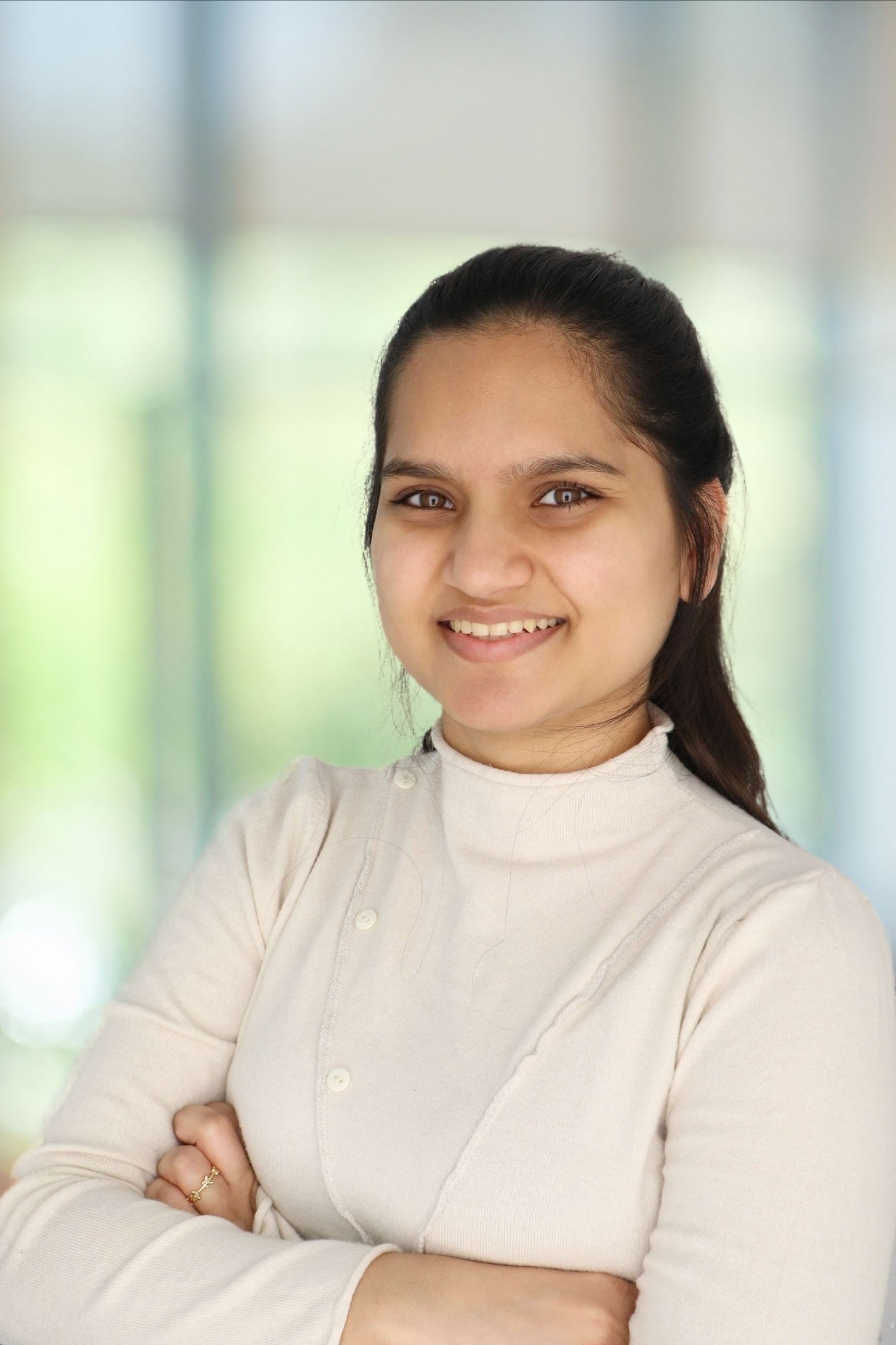
Portrait of Shreya Jain

01 / About

I work where machine learning meets human consequences - clinical decisions, behavioral data, scientific inference. My favourite problems are the ones where why matters as much as what.

Today I'm a Data Scientist at Michigan Medicine, building domain-specific RAG systems and causal extraction pipelines that help researchers reason over thousands of papers and unstructured clinical text.

Before Ann Arbor, I shipped pose-estimation systems for the Indian Ministry of Defence, OCR/NLP invoice automation for an Irish travel firm, and reinforcement-learning patient engagement studies with UM Precision Health.

Based in
Ann Arbor, MI
Currently
Data Scientist, Michigan Medicine
Education
MS Data Science, University of Michigan
Focus areas
LLMs · RAG · Causal Inference · Machine Learning · Data Analysis
Recognition
Ross Hackathon ’24 & ’25 · TAMU Healthcare Hackathon
02

02 / Experience

The journey, so far.

  1. Mar 2025 - Present

    AI Research Engineer - Michigan Medicine

    Ann Arbor, MI+
    • Deployed a Streamlit AI co-scientist platform spanning ASO, CRISPR, Bioinformatics, Global Health, Biomni, and Causal Reasoning, with GPT/Claude generation and persistent FAISS retrieval.
    • Integrated Semantic Scholar, Unpaywall, and curated PDF retrieval, improving Claude’s overall accuracy by 21% and ES-VE classification accuracy by 46% on a balanced 100-variant benchmark.
    • Added parallel grounding across 7 biological databases, including ClinVar, Ensembl, UniProt, and ClinicalTrials.gov, raising batch-mode ES-VE accuracy from 0.60 to 0.81 and positive-class precision from 0.15 to 0.33.
    • Reduced grounding context by 98.9%, from approximately 242K to 2.7K tokens, using query-aware condensation, lightweight model routing, and safeguards that eliminated context-window overflows.
    • Benchmarked 300 gene variants with 2,400 predictions across 4 models and two exon-skipping strategies (ES-RF and ES-VE) using a parallel, resumable, rate-limit-aware evaluation harness.
    • Evaluated model performance using precision, recall, specificity, NPV, F1 score, confusion matrices, abstention-aware scoring, ensemble agreement, and provenance audits to detect execution-mode and model-version confounds.
    • Developed a deterministic causal-inference engine supporting d-separation, collider detection, backdoor-path analysis, and adjustment-set discovery, with LLM-generated graphs benchmarked against DECI and LiNGAM.
    • RAG
    • LangChain
    • DECI
    • LiNGAM
    • NetworkX
    • Streamlit
  2. May - Dec 2024

    Research Assistant - University of Michigan

    Ann Arbor, MI+
    • Built a Python/NLP extraction pipeline combining rule-based parsing, schema-driven processing, and custom spaCy NER (7 domain labels) for historic texts.
    • Fine-tuned GPT-based NER and Llama-3-8B with PyTorch, Hugging Face, LoRA, and quantization, reaching 98% extraction accuracy, 75% domain entity recognition, and 66% F1 on specialized entities.
    • Wrote comprehensive unit tests and automated validation for outlier detection, extracted outputs, and consistency checks, reducing validation time by two hours per dataset.
    • Python
    • spaCy
    • PyTorch
    • LoRA
    • Llama
  3. Aug - Dec 2024

    Graduate Student Instructor - SI 649 · University of Michigan

    Ann Arbor, MI+
    • Taught data visualization with Tableau, Plotly, Altair, D3.js, and GenAI tools.
    • Led interactive design labs with real-world datasets; appointment came with full tuition waiver.
    • Tableau
    • D3.js
    • Altair
    • Plotly
  4. Jun - Aug 2024

    Research Assistant - University of Michigan

    Ann Arbor, MI+
    • Increased patient response rates from 10% to 68% and eliminated 3 hours of daily reporting by engineering SQL ETL pipelines and real-time Power BI KPI dashboards for participation and completion analytics.
    • Enabled predictive engagement modeling across 65 participants by developing reinforcement-learning-based games and behavioral telemetry pipelines for feature engineering, segmentation, and adherence analysis.
    • Modeled early identification of at-risk participants by training and evaluating 3 classification models: Logistic Regression, Random Forest, and XGBoost on behavioral data using feature engineering, cross-validation, and ROC-AUC.
    • SQL
    • Power BI
    • RL
    • XGBoost
  5. Oct 2022 - Jul 2023

    Data Science Intern - Ministry of Defence · DRDO

    Pune, India+
    • Led UI development for a product, from Figma prototyping through the development and deployment of a Flask application.
    • Reduced pose-keypoint jitter by 35% while validating 5 Army drill postures using MediaPipe, OpenCV, and Python.
    • Enabled real-time feedback by classifying 15+ keypoints using joint-angle calculations, visibility, and live error feedback.
    • Achieved 98% detection accuracy and reduced background noise by engineering a YOLOv8/PyTorch auto-cropping pipeline, deployed as an offline Flask application for government use.
    • Figma
    • MediaPipe
    • YOLOv8
    • Flask
  6. Aug - Dec 2022

    Data Scientist - Beyond Business Travel (Remote · Ireland)

    TUS, Ireland+
    • Saved 8+ staff-hours daily by replacing manual invoice entry with a React and Django document-automation website.
    • Achieved 98% extraction accuracy using Python, pypdf, OCR, layout-aware parsing, and automated validation.
    • React
    • Django
    • OCR
    • pypdf

03 / Projects

01

AI · Supply Chain
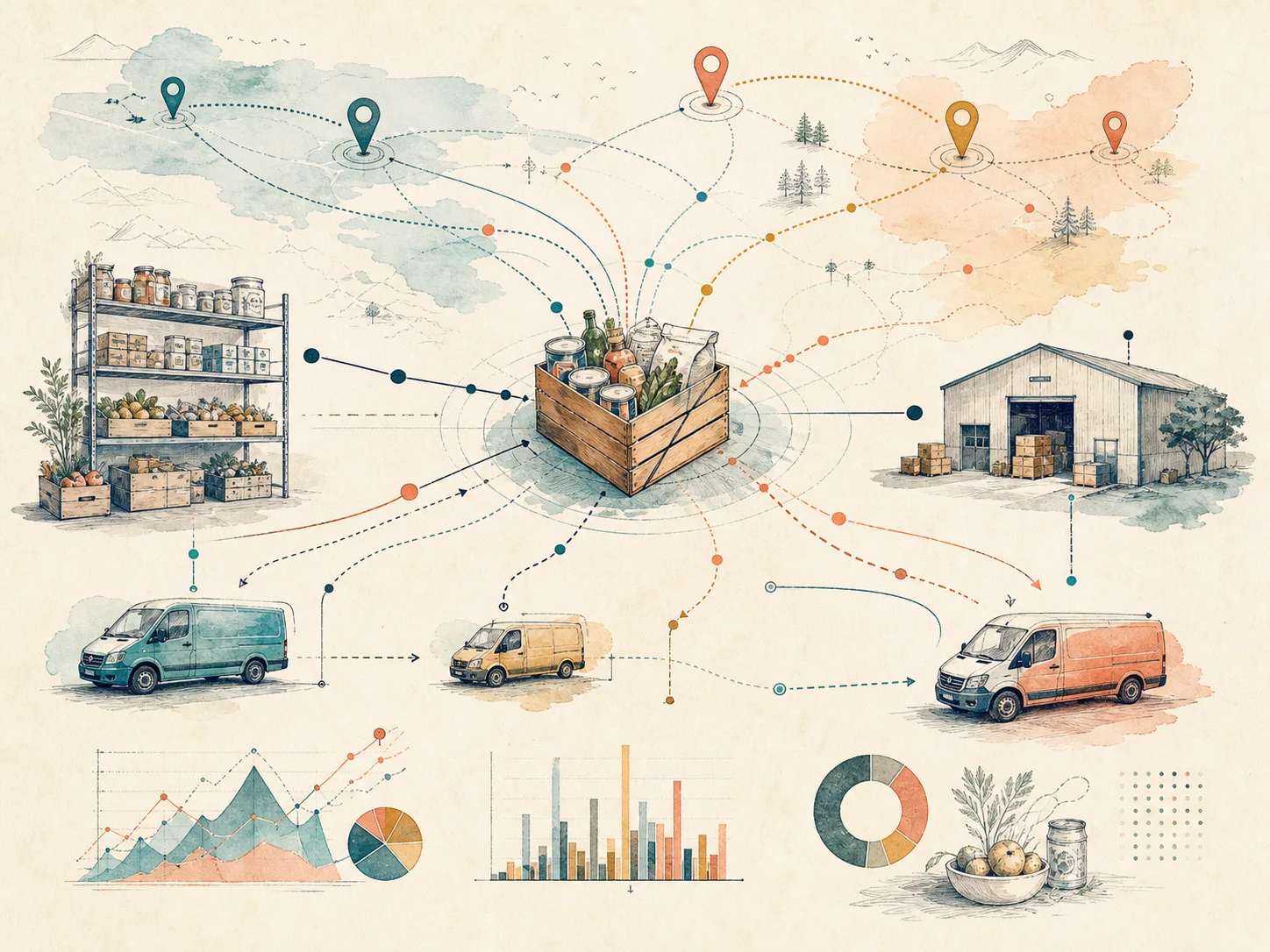
Illustrated food-bank inventory and delivery network for FoodLink
  • Next.js
  • Claude
  • Prisma
  • MapLibre
  • Twilio

FoodLink

  • Built a full-stack supply chain management platform using Next.js 16, React 19, TypeScript, Tailwind CSS, Prisma, and SQLite, supporting inventory, shipments, delivery scheduling, and inter-food-bank transfers across 19 API routes.
  • Integrated Anthropic Claude multimodal AI and structured JSON outputs to extract and normalize inventory data from emails, free-form text, CSV files, and delivery images.
  • Developed a grounded AI inventory copilot using tool calling, Zod validation, tenant-scoped queries, and conversational voice input/output to answer stock, expiration, and nearby availability questions.
  • Engineered a 14-day inventory forecasting system that combines on-hand stock, inbound/outbound shipments, par levels, and expiration data to identify projected shortages and at-risk inventory.
  • Created a geospatial surplus-and-shortage marketplace with MapLibre GL, GeoJSON clustering, and Haversine distance filtering, enabling nearby food banks to coordinate redistribution.
  • Implemented transactional transfer workflows with real-time inventory reconciliation, request negotiation, soft deletion, reversible transactions, and append-only audit trails.
  • Designed driver coordination features with secure token-based check-ins, ETA tracking, consent-gated Twilio SMS integration, and automated shipment status updates.

02

Automation · Security

Illustrated secure job-application capture and classification workflow for RoleSave
  • Next.js
  • PostgreSQL
  • Chrome
  • Docker
  • TypeScript

RoleSave

  • Built a full-stack job application tracker combining a Next.js dashboard, Chrome extension, and background worker in a pnpm monorepo.
  • Automated application updates by parsing inbound emails and classifying confirmations, assessments, interviews, offers, and rejections using confidence-based, multi-signal matching.
  • Engineered an idempotent job-capture pipeline that extracts posting metadata, archives web pages, and converts job descriptions to PDFs inside a hardened, network-isolated Docker container.
  • Designed a secure multi-user PostgreSQL architecture with row-level security, private storage, atomic database functions, deduplication, retryable queues, and auditable event timelines.
  • Created human-in-the-loop review and correction workflows for ambiguous email matches, preventing low-confidence automation from modifying the wrong application.
  • Validated classification, matching, capture, and security behavior with 41 passing TypeScript tests, 14 realistic email fixtures, and database authorization test suites.
03

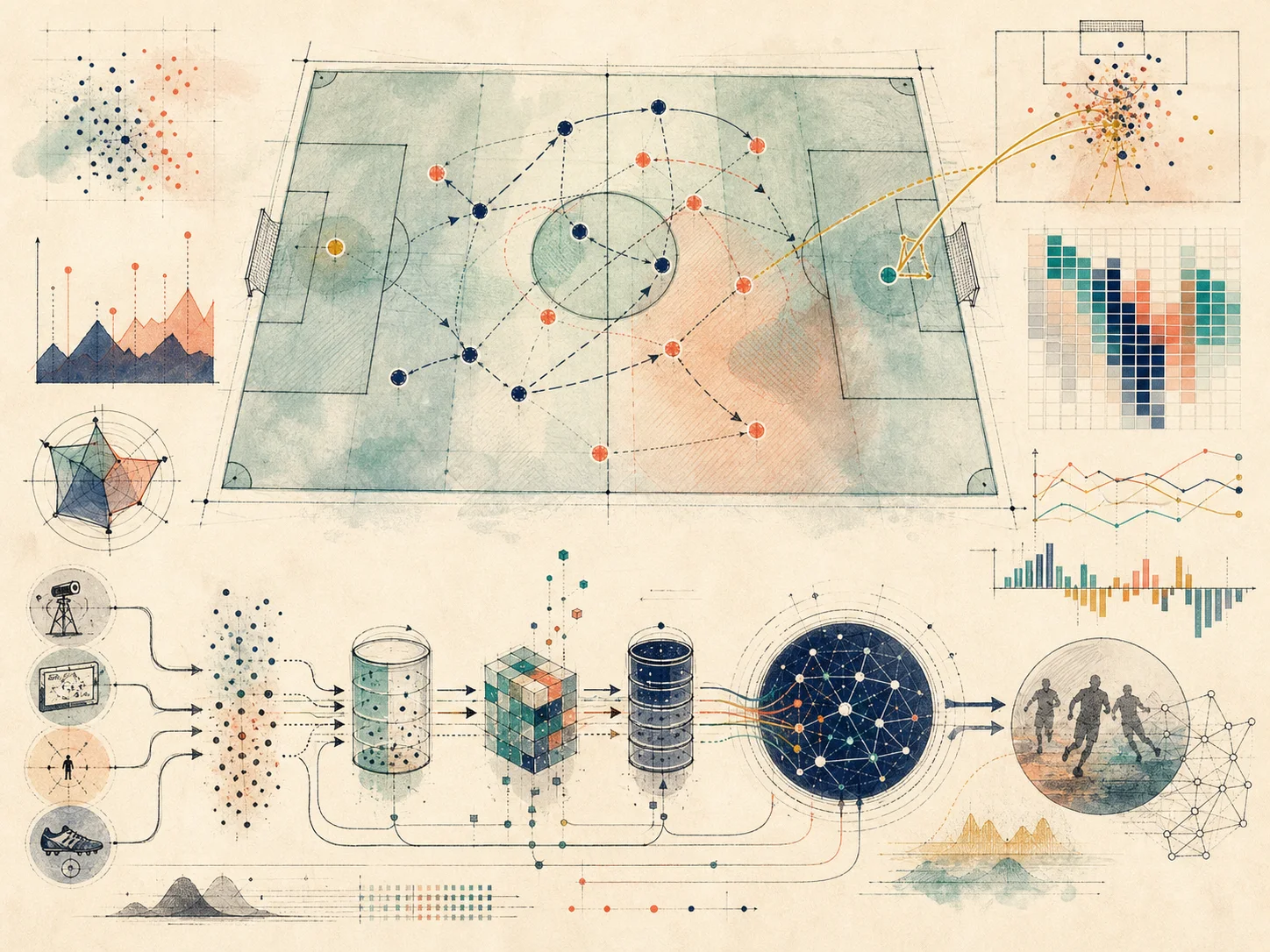
Sports Analytics

Illustrated soccer pitch with passing networks and analytical charts
  • SQL
  • Python
  • Tableau
  • ETL
  • Feature Engineering

Soccer Analytics Dashboard

  • Integrated and cleaned 11 disparate soccer datasets totaling 3M+ records using Python and SQL, building an ETL workflow to resolve inconsistent keys, missing values, and duplicate entries across sources.
  • Engineered performance metrics and season-level aggregations from raw match and player data, then designed an interactive Tableau dashboard with filters and drill-downs for exploring trends across teams, players, and seasons.
  • Optimized performance with Tableau extracts and pre-aggregated views to keep the dashboard responsive on 3M+ rows, published on Tableau Public as a portfolio piece.
04

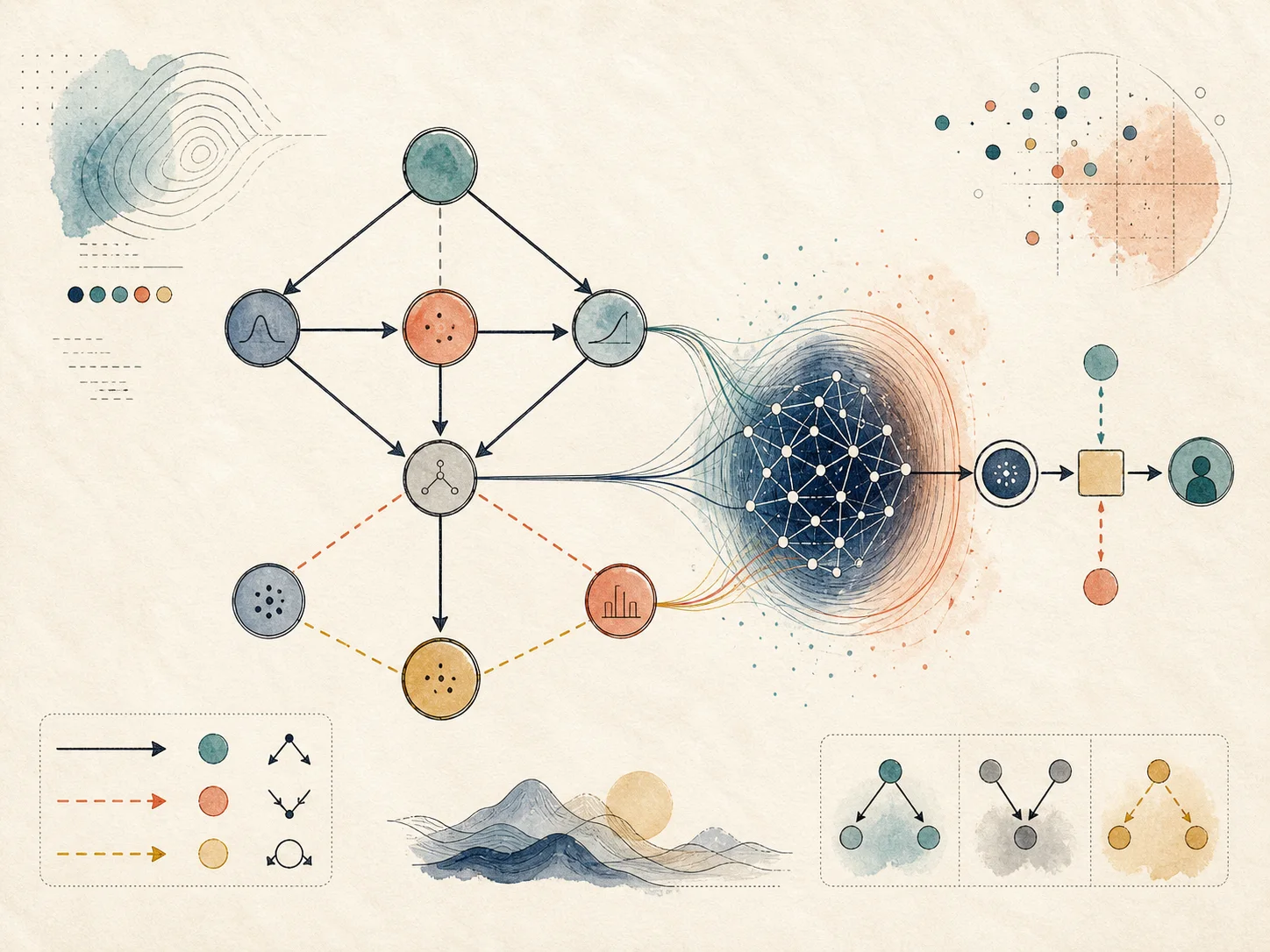
Causal Inference · LLMs

Illustrated causal graph connected to a language model and deterministic query path
  • Claude
  • GPT-4o
  • NetworkX
  • d-separation
  • Causal Inference

Causal Analysis using Large Language Models

  • Built an LLM-based causal discovery pipeline that infers causal structure among 23 under-five child health variables (immunization, malnutrition, schooling, WASH) from a MICS-style household survey.
  • Designed a batched prompting system where Claude/GPT-4o classifies variable pairs as CAUSES, CAUSED_BY, CORRELATED, CONFOUNDED, or INDEPENDENT with structured JSON output, then converts directed judgments into an adjacency matrix and causal graph.
  • Benchmarked the LLM-inferred graph against two statistical causal discovery baselines, DECI and LinGAM, using edge overlap analysis and five centrality metrics (in/out-degree, betweenness, closeness, eigenvector) to quantify where domain knowledge and data-driven methods agree.
  • Implemented core causal inference algorithms from scratch: path enumeration, collider detection, d-separation (with collider-descendant handling), backdoor path identification, minimal adjustment set search, and identifiability checks.
  • Built a natural-language query engine where Claude parses questions like “What should I control for when studying schooling’s effect on malnutrition?” into structured operations executed deterministically against the graph, so answers are derived from formal logic, not generated by the LLM.
  • Validated with a test suite covering parents, confounders, adjustment sets, colliders, d-separation, and identifiability queries.
05

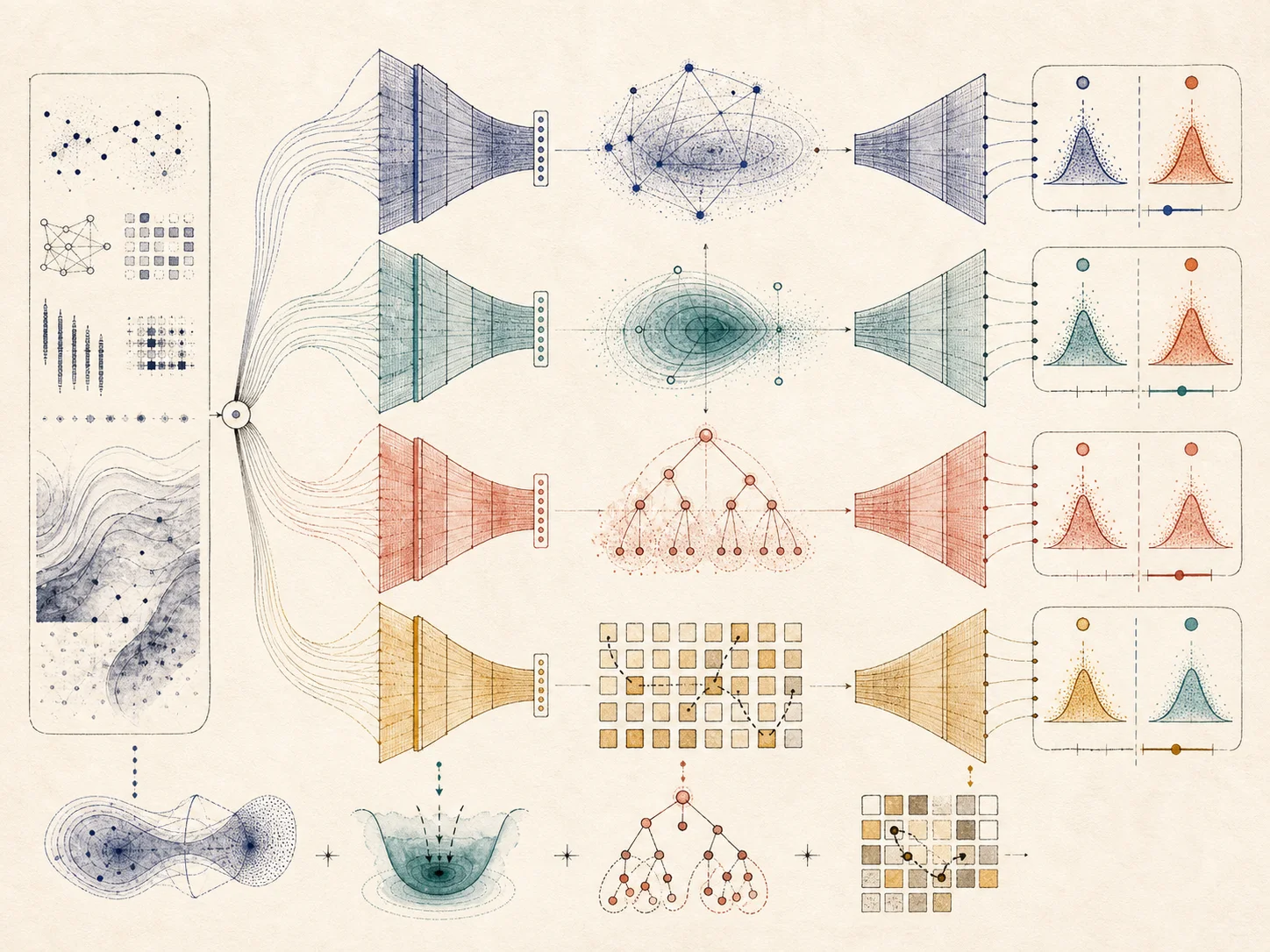
Causal Deep Learning

Illustrated comparison of four variational autoencoder architectures and outputs
  • PyTorch
  • CEVAE
  • Beta-VAE
  • VQ-VAE
  • Causal Inference

VAE Variants for Causal Effect Estimation

  • Extended the CEVAE deep latent-variable model (NeurIPS 2017) to test whether advanced VAE architectures improve causal effect estimation under unmeasured confounders, implementing four variants in PyTorch: Correlated-VAE, Beta-VAE, Hierarchical VAE, and VQ-VAE.
  • Built an end-to-end evaluation pipeline with grid search hyperparameter tuning, Adamax optimization, early stopping, and parallel experiment execution, benchmarking all models on 3 real-world datasets (IHDP, JOBS, TWINS) and synthetic data across 4 causal metrics (ATE, ATT, PEHE, policy risk).
  • Achieved best PEHE of 1.47 ± 0.18 and ATE error of 1.26 ± 0.75 on the JOBS dataset, and showed that standard CEVAE matches more complex variants in accuracy, indicating its architecture has sufficient capacity for these causal inference tasks.
06

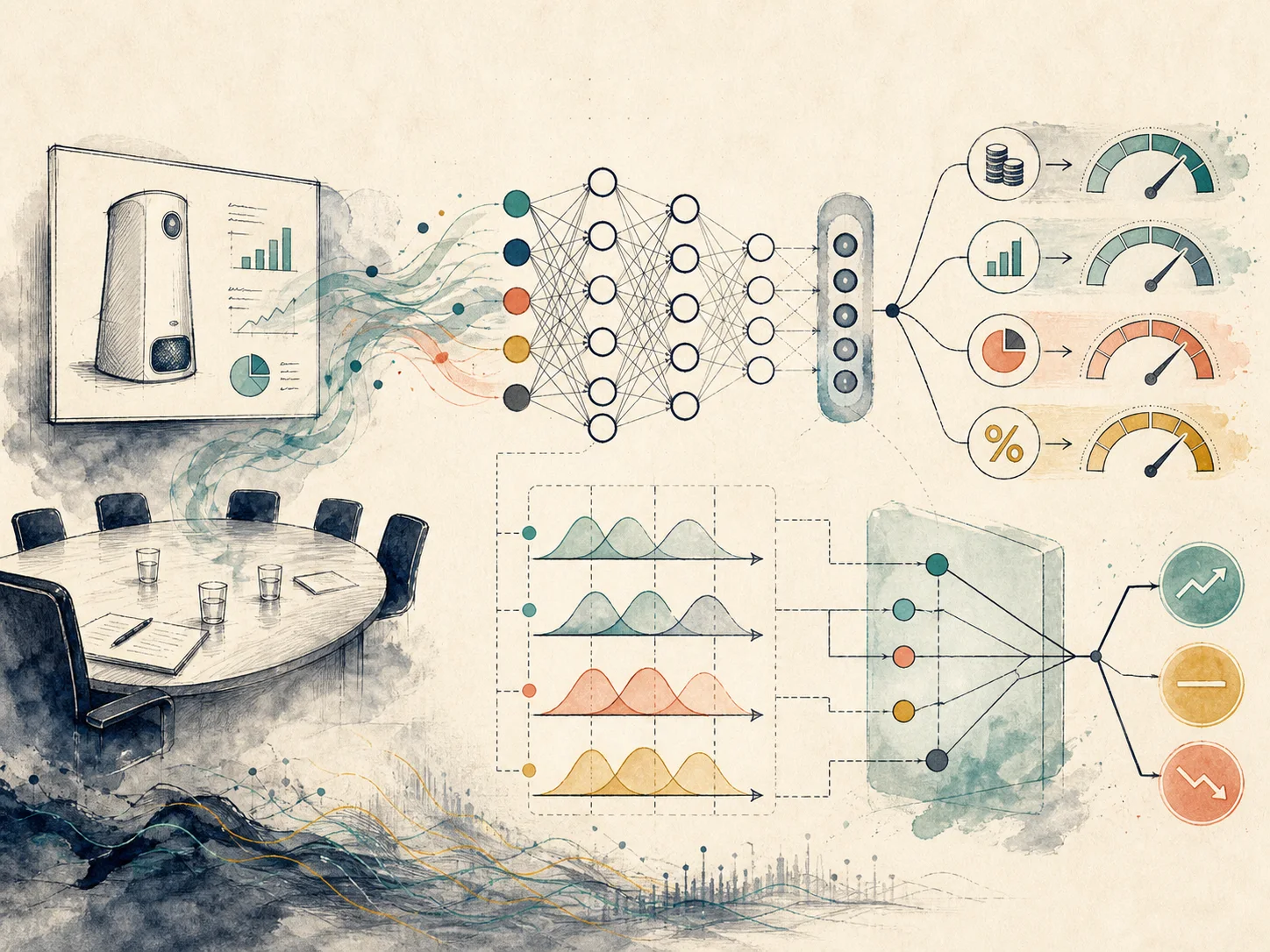
Applied ML · Fuzzy Logic

Illustrated startup-pitch prediction model and fuzzy deal-quality system
  • Python
  • ANN
  • Fuzzy Logic
  • MATLAB
  • EDA

Shark Tank India: Deal & Quality Prediction

  • Built an ANN model to predict whether Shark Tank India investors would make an offer to a startup, achieving an F1 score of 87.09% on an imbalanced dataset, outperforming SVM, Random Forest, KNN, and other classifiers.
  • Designed a 22-rule Mamdani fuzzy logic system to classify deal quality (below average / average / good) based on startup revenue, valuation, and age, producing interpretable outputs founders can act on.
  • Curated a custom dataset of 121 Shark Tank India pitches from public sources, engineering features like YoY revenue, equity ask, industry, and founder demographics through label encoding and imputation.
  • Identified key pre-pitch predictors of investor offers - revenue, industry, ask amount, and equity percentage - isolating only features available before a deal is declared to avoid data leakage.
  • Published and presented at ACM ICIMMI 2022.

04 / Education

Trained in statistics, raised on engineering.

Graduate

University of Michigan

Master's in Data Science (Statistics)

Ann Arbor, MI · Aug 2023 - May 2025

GSI with tuition waiver (SI 649) · Ross Hackathon ’24 & ’25 · TAMU Healthcare Hackathon.

  • Probability & Distribution Theory
  • Statistical Inference I & II
  • Machine Learning & Regression
  • Time Series Analysis
  • Causal Inference
  • Data Analytics & Visualization
Undergraduate

Savitribai Phule Pune University

B.Tech, Information Technology (VIIT)

Pune, India

Event Head - CodeChef & TEDxVIIT · Finance / Sponsorship Lead · Sports Club Representative.

  • Machine Learning & AI
  • Discrete Mathematics
  • OS & Networking
  • Data Structures & Algorithms
  • C / C++ / Java / JS / PHP
  • Object-Oriented Programming

05 / Publications

Research at the edges of ML, AI-assisted decision support, and applied systems.

Peer-reviewed publications and preprint work with collaborators across India, Kenya, and the US.

  1. medRxiv 202601 / 03

    Development and Evaluation of Artificial Intelligence–Assisted Decision Support System for Public Health Emergency Classification and Escalation in Kenya

    Mark Nanyingi, Eric Osoro, Geoffrey H. Siwo, Isaac Ngere, Samuel Kadivane, James Magige, Joseph Kamau, Shreya Jain, Bryan O. Nyawanda, Joseph Njoroge, Ian Njeru, Kadondi Kasera, Victoria Kanana, Kamene Kimenye

    medRxiv preprint · Posted July 10, 2026

    Read paper
  2. ACM 202302 / 03

    Offer and Deal-Quality Prediction using Machine Learning and a Fuzzy Approach: A Shark Tank India Case Study

    Shreya Jain, Atharva Parikh

    Proceedings of the ACM Web Conference 2023

    Read paper
  3. IEEE 202403 / 03

    Empowering India's Climate Action: Harnessing Blockchain for Carbon Trading

    Shreya Jain, Atharva Parikh, Riddhi Pawar, Shruti Jawale

    2024 IEEE International Conference on Blockchain and Distributed Systems Security (ICBDS)

    Read paper

06 / Inquiry

Let's build something
worth measuring.

Open to AI engineering and data science roles, research collaborations, and conversations with founders building in healthcare, scientific tooling, or applied ML.

Location
Ann Arbor, MI · USA